Introduction
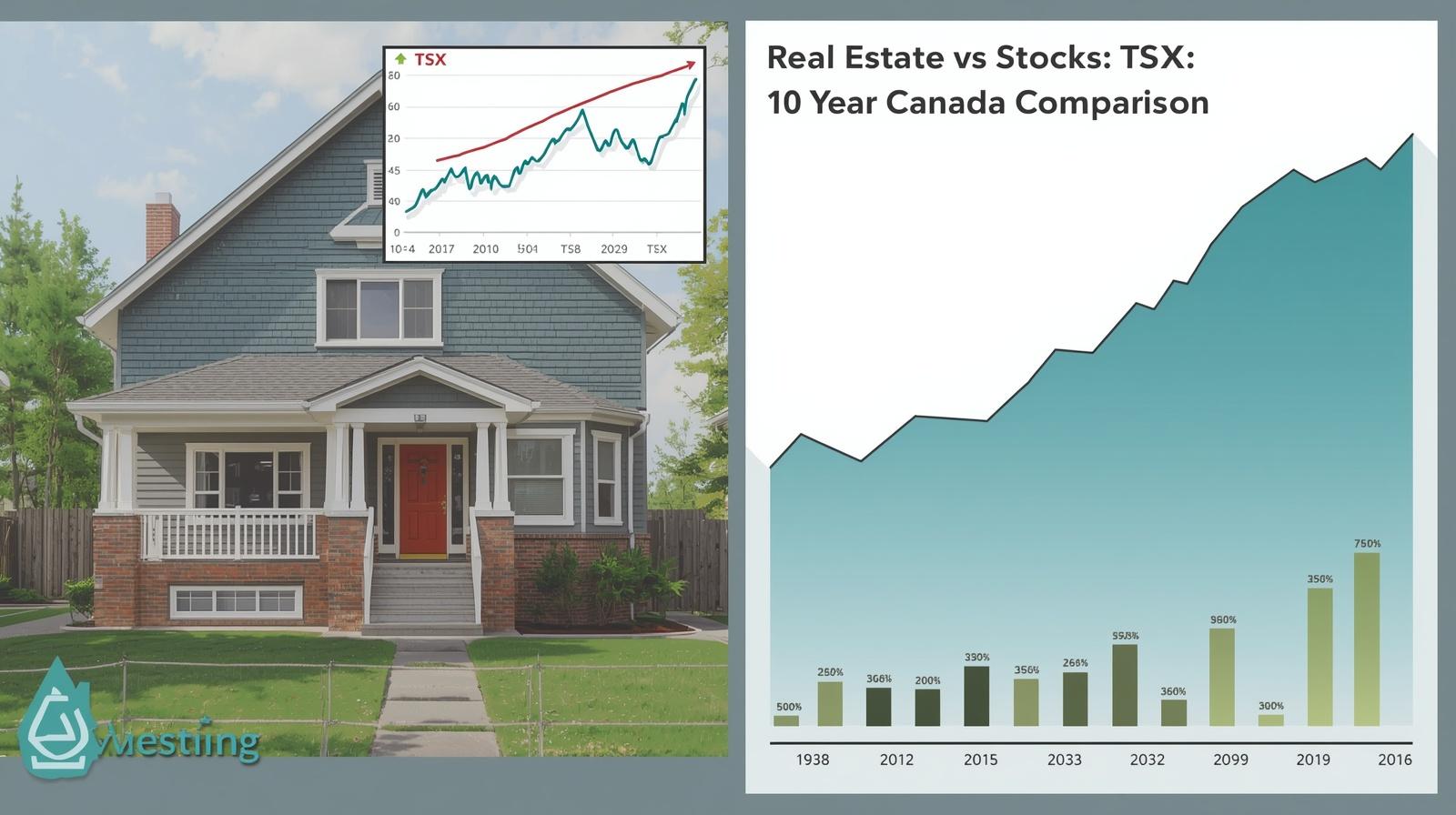
One of the most debated questions in Canadian personal finance is whether real estate or stock market investing delivers better long-term returns. Canadians have historically shown a strong cultural preference for real estate, and the extraordinary price appreciation in markets like Toronto and Vancouver over the past two decades has seemed to validate that preference. But is the preference justified by data, and does it hold across different time periods and markets?
Real Estate Returns: The Complete Picture
Real estate returns are often presented in terms of price appreciation alone, which understates the full picture. Total returns from real estate include price appreciation, rental income (net of expenses), and the leverage effect of using a mortgage. A $500,000 property purchased with $100,000 down that appreciates 30% over five years generates a 150% return on the invested capital — the leverage amplifies both gains and potential losses.
However, the real estate return calculation is also complicated by transaction costs (buying and selling typically costs 4% to 6% of property value in total), the ongoing cost of management, maintenance, and tenant relationships, and the illiquidity of the asset, which prevents rapid reallocation in response to changing conditions.
Stock Market Returns
Canadian equity markets, as represented by the S&P/TSX Composite Index, have delivered average annual returns (including dividends) in the range of 6% to 8% over long time periods — comparable to global equity averages. Canadian investors have also had access to US and global equities through index funds and ETFs, which have delivered stronger returns over the past decade, particularly through major US technology companies.
Stock market investing offers advantages that real estate cannot match: immediate liquidity, instant diversification across hundreds or thousands of companies, negligible transaction costs through low-fee index funds, and no management burden. The passive investor who simply buys and holds a diversified portfolio of low-cost index funds has historically achieved excellent long-term results with minimal effort.
The Verdict for 2026
A nuanced comparison suggests that neither asset class is universally superior — the answer depends on the specific real estate market, the time period, the leverage employed, and the individual investor’s circumstances and skills. For the average Canadian in a high-appreciation market like Toronto, real estate has historically been a powerful wealth builder. Going forward, the gap is likely to narrow as real estate returns moderate. A diversified wealth-building strategy that includes both real estate and equities is the most prudent approach for most investors.