Introduction
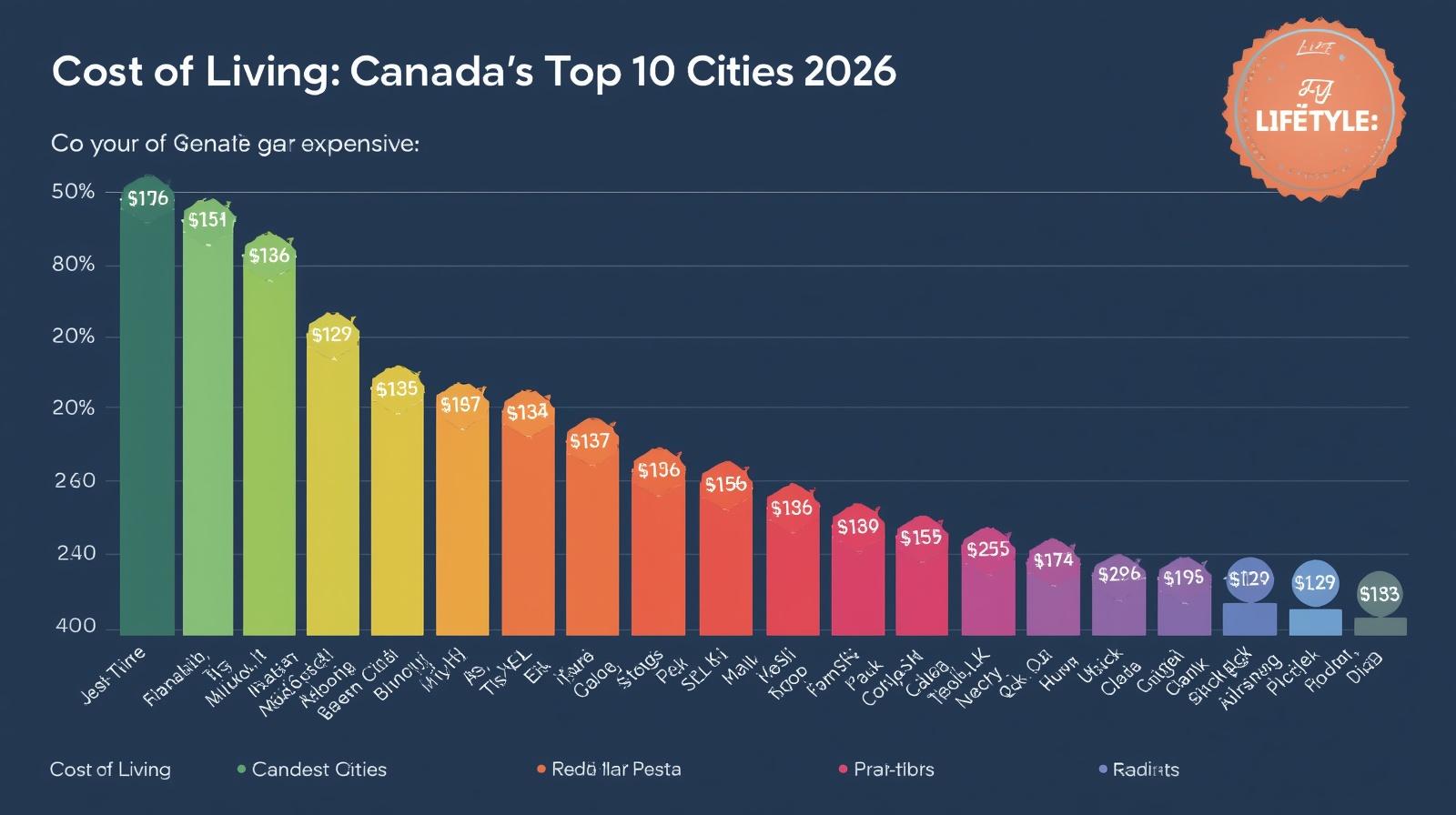
Understanding the cost of living across Canada’s major cities is increasingly important as remote work expands the geographic range of where Canadians can realistically live. This comparative overview covers housing, transportation, food, and taxes across Canada’s ten largest cities to help you assess your options.
Vancouver
Vancouver consistently ranks as Canada’s most expensive city for housing, with benchmark home prices exceeding $1.1 million metro-wide and one-bedroom apartments averaging over $2,500 in many areas. Combined with BC’s relatively high income taxes and significant property transfer taxes, Vancouver represents the most challenging affordability environment in the country.
Toronto
Toronto is marginally less expensive than Vancouver for housing on most metrics but remains Canada’s second most expensive city. The GTA’s job market is the deepest and most diverse in Canada, which partially offsets the cost burden. Ontario income taxes are broadly comparable to BC, and the combination of municipal and provincial land transfer taxes adds significant transaction costs for buyers.
Calgary
Calgary stands out as the most affordable of Canada’s four largest cities, with significantly lower housing costs than Toronto or Vancouver and no provincial income tax. This combination makes Calgary the clear winner from a pure cost-of-living perspective among major urban centres. The city’s strong economy further enhances its attractiveness.
Ottawa and Montreal
Ottawa offers a middle ground — more affordable than Toronto and Vancouver but with solid employment and infrastructure. Montreal remains Canada’s most affordable large city despite significant price appreciation in recent years. Quebec’s higher provincial income taxes partially offset housing cost advantages, but for many households, Montreal still represents exceptional value.
Edmonton, Winnipeg, Regina, and Saskatoon
Prairie cities offer some of Canada’s most affordable urban living. Edmonton, Winnipeg, Regina, and Saskatoon all feature housing costs far below the national major-city average, manageable cost of living overall, and functioning job markets. The trade-offs include harsher winters, more limited amenities compared to major metropolitan centres, and in some cases, less diverse employment markets.
Halifax
Halifax offers a genuinely compelling combination of relative affordability, high quality of life, ocean access, and a welcoming community culture. The Atlantic Canada advantage — lower costs, slower pace, strong communities — has attracted significant interprovincial migration in recent years, and while prices have risen from their pre-pandemic lows, Halifax remains meaningfully more affordable than major Ontario and BC cities.