Background
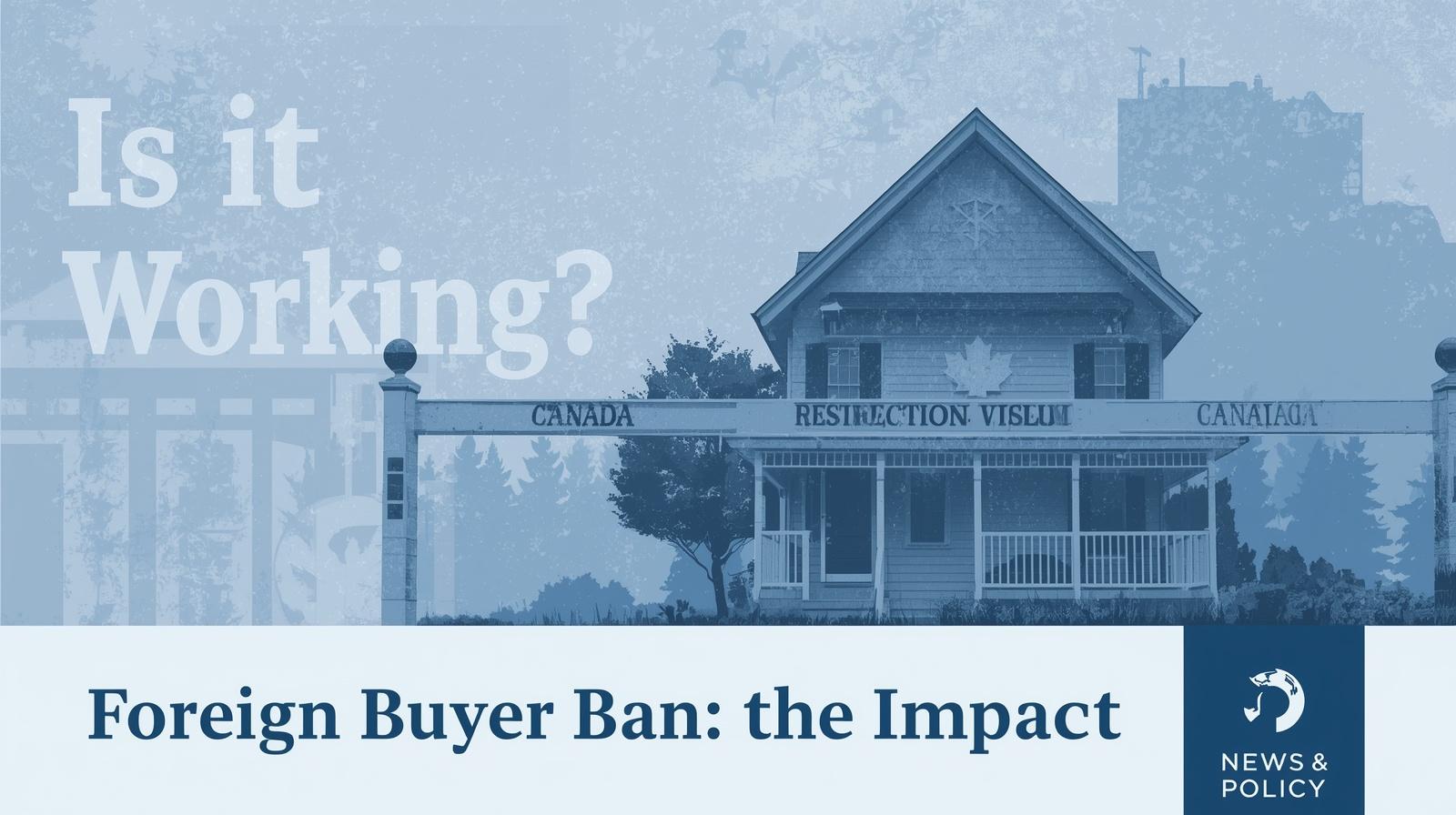
Canada’s Prohibition on the Purchase of Residential Property by Non-Canadians (commonly referred to as the foreign buyer ban) came into force on January 1, 2023, and has been extended into 2026. The policy was introduced in response to public and political pressure to address the role of foreign investment in driving up home prices, particularly in major urban markets like Toronto and Vancouver where housing affordability had become a critical public concern.
Scope of the Prohibition
The prohibition applies to foreign nationals — people who are neither Canadian citizens nor permanent residents — and to foreign commercial enterprises purchasing residential real property. It applies to properties with fewer than four dwelling units, including detached and semi-detached houses, condominiums, and townhomes. Exempt from the prohibition are Canadian citizens, permanent residents, refugees, and certain work and study permit holders meeting specific criteria.
Measured Impact on Markets
The measured impact of the foreign buyer ban on housing markets has been more limited than some proponents had hoped. Research suggests that while foreign buyers were present and active in certain segments of Canadian real estate markets — particularly high-end Toronto and Vancouver condos — they did not represent the dominant source of demand that popular perception sometimes suggested.
Vancouver and Toronto saw housing price corrections beginning in early 2022, but these corrections appear to have been driven primarily by the Bank of Canada’s rate hiking cycle rather than by the foreign buyer restrictions. The relationship between foreign demand and overall market prices is complex and not fully captured by simple policy measures.
Ongoing Debate
The foreign buyer ban remains politically popular but economically contested. Proponents argue it is an important signal of Canada’s commitment to prioritizing domestic homeownership over international speculation. Critics argue it does little to address the fundamental supply shortage that underlies Canada’s affordability crisis and may unfairly impact legitimate purchasers who are in the process of establishing Canadian residency. The debate over its effectiveness and fairness is ongoing.